

Mr Juan Agustin Soler-Fernandez
CONSULTANT ORTHOPAEDIC SURGEON
Home » Knee Conditions » Meniscal Tears
If you’re experiencing knee pain, swelling, or a locking sensation after an injury or through everyday wear and tear, a meniscal tear may be the cause.
Early diagnosis and appropriate treatment can help relieve symptoms, restore movement, and protect the long term health of your knee.
As a specialist knee surgeon in Wirral, Cheshire, I diagnose and treat meniscal tears using both non-surgical and surgical treatments.
From your initial consultation through to rehabilitation, I provide personalised care tailored to your injury, lifestyle, and activity level, helping you return to the activities you enjoy with confidence.
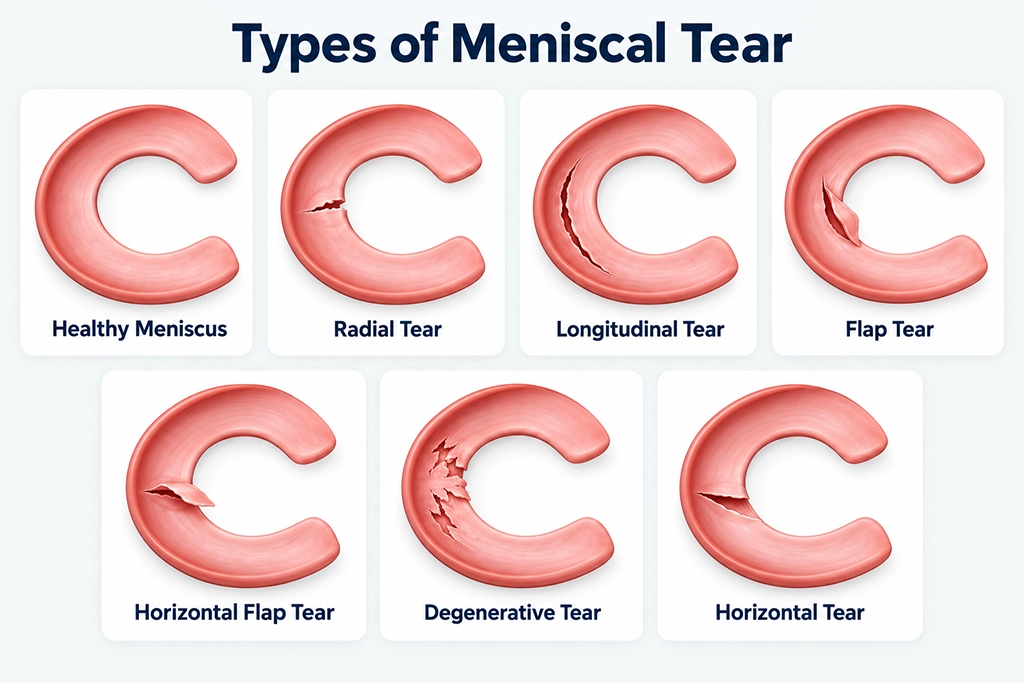
The menisci are two crescent-shaped pieces of cartilage that sit between the thigh bone (femur) and shin bone (tibia). They act as shock absorbers, helping to distribute weight across the knee joint while providing stability and protecting the cartilage.
A meniscal tear occurs when this cartilage becomes damaged. Tears are commonly caused by twisting injuries during sport, but they can also develop gradually as the cartilage naturally weakens with age. Degenerative meniscal tears are particularly common in people over the age of 40.
Symptoms vary depending on the type and severity of the tear but often include pain along the joint line, swelling, stiffness and difficulty fully bending or straightening the knee. Some patients also experience clicking, catching or locking of the joint.
Early assessment is important, as prompt treatment can relieve symptoms and, where possible, preserve the healthy meniscus to help protect the knee from future arthritis.
Treatment for a meniscal tear depends on the location and severity of the injury, your age, activity level and the overall health of your knee. The aim is to relieve pain, restore normal knee function and preserve as much healthy cartilage as possible.
Treatment options may include:
During your consultation, I will explain the most appropriate treatment options based on your individual circumstances. Where surgery is recommended, minimally invasive arthroscopic techniques allow the meniscus to be repaired or treated through small incisions, often resulting in a quicker recovery than traditional open surgery.
Treatment is recommended for patients whose symptoms are affecting their mobility, sporting activities or everyday quality of life.
You may benefit from treatment if you experience:
During your consultation, I will assess your symptoms, examine your knee and review any imaging, including MRI scans where appropriate, before recommending the most suitable treatment for your condition.
From diagnosis and treatment planning through to rehabilitation, I provide personalised care focused on relieving your symptoms, restoring knee function and helping you return safely to your normal activities.
Together, we will discuss all appropriate treatment options, from conservative management through to arthroscopic surgery where appropriate, ensuring you have the information you need to make an informed decision about your care.
During your consultation, I will explain the most appropriate treatment options based on your individual circumstances.
If knee pain, swelling, or locking is affecting your mobility or preventing you from enjoying an active lifestyle, please get in touch to arrange a consultation and find out how treatment for a meniscal tear can help you recover and move with confidence.
Choosing a surgeon is an important decision. Read verified patient reviews to learn about their experiences with Mr Agustín Soler-Fernandez, from their initial consultation through to recovery and follow-up care.
Trusted by patients for specialist expertise, clear communication and compassionate, personalised care.